The Beacon | AI & Business
AI, Fear, and the Future of Work
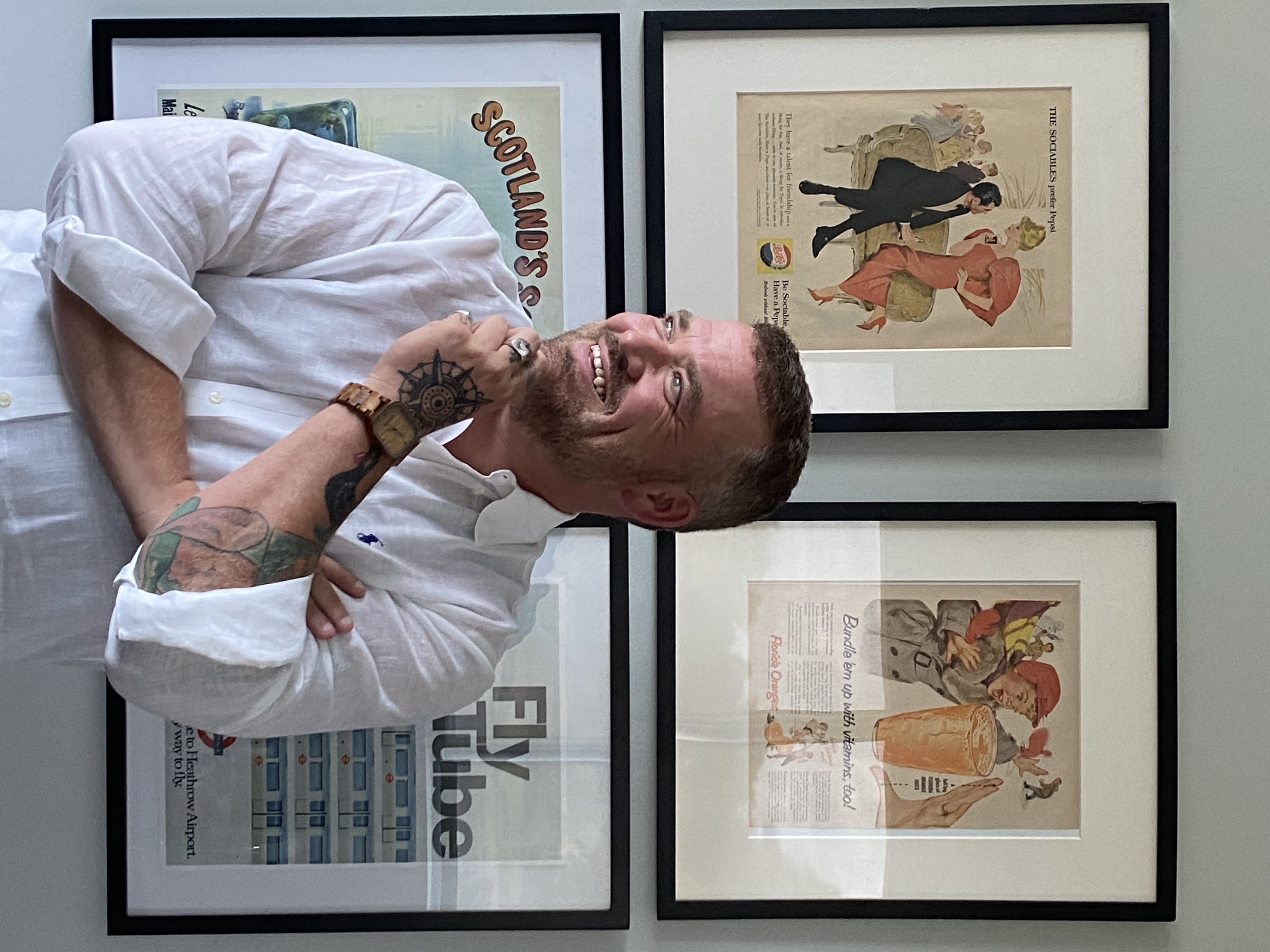
I started my career at a startup called EarthLink, at the time one of the leaders in the ISP (Internet Service Providers) game. Back then, I was selling this new thing called dial-up Internet. If you're old enough to remember it, you probably remember the sound your modem made every time you connected.
Then something revolutionary arrived: DSL.
It was advertised as being nearly 50 times faster than dial-up, and I remember thinking, "Technology doesn't get much better than this." Of course, I was wrong. DSL gave way to cable, cable gave way to fiber, smartphones transformed how we live, and today we're standing at the beginning of another technological shift that may be even bigger than all of them: Artificial Intelligence.
Every major innovation brings opportunity, but it also brings uncertainty. I remember people worrying that the internet would eliminate jobs, change industries, and make entire careers obsolete. Some of those fears came true. Many didn't.
Over the past year, I've spent hundreds of hours researching AI, testing different platforms, building AI-powered marketing systems, and exploring how businesses can use it responsibly. As President of Forgelight Marketing Group, and as a business owner myself, I don't just look at AI through the lens of technology. I look at it through the lens of leadership.
And no matter where I go, the same questions keep coming up.
Business owners are asking if they're falling behind. Employees are wondering if AI is coming for their jobs. Executives are excited about the possibilities but worried about security, privacy, and how to introduce AI without creating confusion inside their organizations.
The reality is . . . I share many of those questions.
That's why I wanted to write this article.
Not to tell you that AI is something to fear, or something to blindly embrace, but to share what I've learned, what I'm seeing in the marketplace, and how I believe businesses and employees should be thinking about this next chapter.
Because if history has taught me anything, it's this:
The biggest risk isn't that technology changes. It's failing to change with it.
The best way to deal with fear isn't to ignore it, it's to acknowledge it.
So, let's talk about it.
Over the past several months, these are the conversations I've been having almost every day with business owners, executives, and employees. The headlines make it sound like artificial intelligence is coming for every job in America, and understandably, people are looking for answers.
The questions I hear most often are:
"What's your honest opinion on AI?"
"We're excited about AI, but we're terrified about security, privacy, and exposing sensitive company data. How should we be thinking about that?"
"We know AI is something we need, but we have no idea where to start. How do we implement it without creating chaos?"
"Be honest... is AI eventually going to replace me or a large portion of my team?"
Let's start with the first one.
Q1: What's Your Honest Opinion on AI?
A: Whether we like it or not, AI is here. The genie isn't going back in the bottle.
The first step isn't resisting it, it's understanding it. And admittedly, that's easier said than done. The AI landscape is evolving at an incredible pace, with new tools, models, and terminology appearing almost weekly. ChatGPT calls something a "Custom GPT," Claude calls it a "Project," Gemini has its own terminology, and dozens of other platforms have their own language. To someone just getting started, it can feel like everyone is speaking a different dialect.
And that's exactly where fear begins.
When we don't understand something, we naturally become cautious of it. That's human nature. The more unfamiliar something feels, the easier it is to imagine worst-case scenarios.
My view is this: AI is one of the most significant technological advancements I've seen in my career. I'd put it in the same category as the internet, smartphones, and cloud computing, not because it's replacing everything overnight, but because it's fundamentally changing how we work, communicate, and solve problems.
Like every major innovation before it, AI brings uncertainty. There are legitimate concerns around security, ethics, privacy, and the future of work. But there are also extraordinary opportunities for businesses and individuals willing to learn, adapt, and use it responsibly.
The goal shouldn't be to fear AI or blindly embrace it.
The goal should be to understand it well enough to make informed decisions.
Q2: "We're Excited About AI, But We're Terrified About Security, Privacy, and Exposing Sensitive Company Data. How Should We Be Thinking About That?"
A: This is probably the question I get asked more than any other . . . and it's a good one.
My answer usually surprises people.

You should be concerned. You should be worried. But you shouldn't be paralyzed.
Every new technology introduces risk. When cloud computing first emerged, companies said they'd never put their data on someone else's servers. Today, most businesses run on Microsoft 365, AWS, Google Workspace, Salesforce, Dropbox, and dozens of other cloud-based platforms.
AI is no different.
The mistake isn't using AI. The mistake is using it without rules or in my opinion without basic understanding of what it actually is, what it actually does and does not do, and how it actually works.
If you're copying confidential contracts into a public AI tool, uploading customer lists, sharing financial data, or entering proprietary source code without understanding how that platform handles your data, then yes, you have a legitimate security problem. But that's a governance issue, not an AI issue.
As business leaders, it's our responsibility to establish guardrails before we hand employees the keys.
That means creating clear AI usage policies. Define what information can and cannot be entered into AI platforms. Decide which tools your company approves. Train your employees. Review AI-generated work before it reaches a customer. And understand that not every AI platform treats your data the same way.
One thing I tell clients all the time is this:
Don't confuse public AI with private AI.
There's a huge difference between asking ChatGPT to help write a job description and connecting a secure AI system to your internal knowledge base with the appropriate security controls. Those are two completely different use cases with very different levels of risk.
Could AI create new security challenges? Absolutely.
But so did email.
So did smartphones.
So did cloud computing.
We didn't stop using those technologies, we learned how to use them responsibly.
I believe AI will follow the same path.
Companies that succeed won't be the ones that avoid AI because they're afraid of it. They'll be the ones that put the right policies, training, and oversight in place so they can take advantage of its benefits without exposing themselves to unnecessary risk.
Q3: "We Know AI Is Something We Need, But We Have No Idea Where to Start. How Do We Implement It Without Creating Chaos?"
A: My advice is simple:
Don't start with AI. Start with your business.
One of the biggest mistakes I see companies making is trying to force AI into every department because they feel like they're falling behind. They buy a dozen AI subscriptions, tell everyone to "go use AI," and six months later they're paying for tools no one understands or uses consistently.
That's not an AI strategy.
That's panic buying.
Here's my hot take:
Most executives don't actually understand AI yet.
They're hearing the same headlines everyone else is. They attend a conference, listen to a keynote, hear words like agents, LLMs, RAG, MCP, automation, and reasoning, then come back to the office saying, "We need AI."
When you ask them exactly what that means and how AI fits their business, what problems they're trying to solve, what success looks like, or where the guardrails should be. . . overwhelmingly most can't answer the question.
And that's okay.
We're all learning together.
This technology is moving faster than any other I've seen in my career. No one, not even the largest companies, is getting everything right the first time.
So, if you're an executive reading this, don't pretend to have all the answers. Your employees don't expect perfection. They expect leadership. Be honest about what you know, what you don't know, and commit to learning alongside your team.
Instead of asking, "How do we use AI?" ask a much better question:
"What's slowing my team down every day?"
Is it reporting? Research? Responding to emails? Customer service? Proposal writing? Scheduling? Data entry?
Those repetitive, time-consuming tasks are where AI delivers the biggest return. Let AI handle the work that people don't enjoy doing so your employees can spend more time solving problems, building relationships, and creating value.
Or, heaven forbids, LEARNING AI.
You also don't have to boil the ocean.
Pick one department. Pick one workflow. Pick one measurable problem. Run a pilot, measure the results, gather feedback, and refine the process before expanding across the organization.
At Forgelight, that's exactly how we've approached AI. We didn't wake up one morning and decided to automate everything. We started by identifying repetitive marketing tasks, testing different platforms, building guardrails, and learning what worked and just as importantly, what didn't.
The companies that win with AI won't necessarily be the ones spending the most money.
They'll be the ones humble enough to admit they don't have all the answers, disciplined enough to start small, and committed enough to keep learning.
Q4: "Be Honest... Is AI Eventually Going to Replace Me or a Large Portion of My Team?"
A: This is the hardest question to answer because it deserves an honest answer, and not one most people want to hear.
My answer is YES... absolutely.
Yes, AI will eliminate some jobs to start and eventually most jobs.
History tells us that's true. The automobile replaced horse-and-buggy manufacturers. ATMs reduced the need for bank tellers while creating different banking roles. The internet transformed travel agencies, newspapers, and retail. Technology has always changed the workforce.
AI will be no different.
But here's where I think the conversation gets it wrong.
I don't believe AI is coming for your job… (at least right now).
I believe it's coming for parts of your job.
Every role has work that is repetitive, administrative, and frankly... boring. Copying data between systems. Scheduling meetings. Building reports. Researching information. Writing first drafts. Summarizing meetings. Those tasks are increasingly being handled by AI.
That's not necessarily bad news.
If AI can eliminate three hours of low value work every day, that gives you three more hours to do the things that actually require you, e.g. building relationships, solving complex problems, thinking strategically, mentoring your team, or serving customers.
Here's what I do believe:

The employee who refuses to learn AI will eventually struggle against the employee who embraces it.
Not because AI made one person smarter. Because one person learned how to multiply their productivity.
The same is true for businesses.
Companies that simply use AI to cut payroll may see a short-term financial benefit, but they risk losing institutional knowledge, creativity, and the human relationships that customers still value.
The companies that use AI to make their people faster, more informed, and more effective will build a much stronger competitive advantage.
So, if you're worried AI is coming for your job, I'd encourage you to ask a different question:
"How can I become the person who knows how to work with AI better than anyone else on my team?"
Because that's where the opportunity is.
I've said it before, and I believe it more every day:
AI won't replace great employees. Great employees who know how to use AI will replace those who don't.
The future isn't AI versus humans.
The future is humans who know how to leverage AI vs. those that don't or WONT!
Final Thoughts
If you've made it this far, I hope one thing is clear:
AI isn't the future anymore. It's the present.
Whether you're excited by it or terrified by it, the outcome is the same. AI is already changing how businesses operate, how employees work, and how customers discover and buy from brands.
You have two choices.
You can wait until your competitors figure it out first and spend the next five years trying to catch up.
Or you can start learning today.
At Forgelight, we made our decision a long time ago.
We aren't sitting on the sidelines watching AI evolve, we're building with it. We've invested hundreds of hours designing, testing, breaking, rebuilding, and refining AI-powered systems because we believe the agencies of tomorrow won't look anything like the agencies of yesterday.
That's why we built the Forgelight Ads Engine, our human-led, AI-powered marketing platform that combines intelligent automation with experienced strategists. We didn't build it to replace marketers. We built it to eliminate the repetitive work that slows them down, surface insights faster than any human could on their own, and help our clients make smarter, more profitable marketing decisions.
But technology alone has never been the advantage.
The advantage is knowing how to use it.
Five years from now, I don't think the biggest divide in business will be between large companies and small companies.
It will be between organizations that embraced AI now and those that kept waiting for the "right time."
Here's my prediction:
The companies that treat AI like a toy will be forgotten.
The companies that fear AI will be left behind.
The companies that learn it, govern it, and put it to work alongside talented people will define the next generation of business.
We're betting on that future.
The question is...
Are you?